Choose your visit
One-day highlights
Use a one-day pass when you are intentionally limiting the visit to a small number of major temples and are comfortable with transfers, heat and concentrated sightseeing in one day.
Cambodia · Monumental
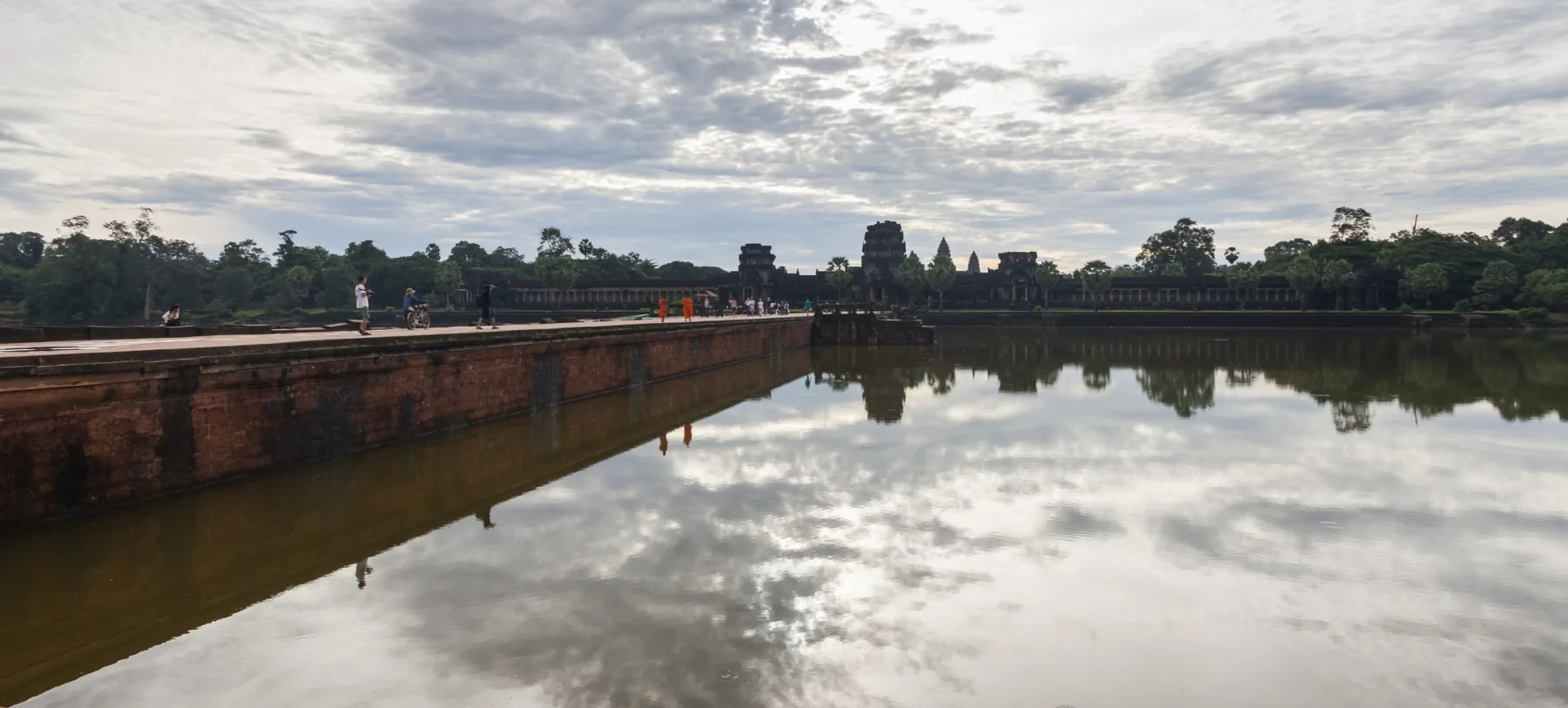
One-Day, Three-Day or Seven-Day Pass? The pass duration should follow the temples, distances and pace you want across the archaeological park, not Angkor Wat alone.
Start with the decision13.4125 N / 103.8670 E · checked 2026-08-31
Quick decision
Choose pass duration from the number of temple groups and the pace you want, not from Angkor Wat alone. Angkor Enterprise currently sells one-day, three-day and seven-day Angkor park passes, while APSARA’s visitor guidance treats the World Heritage property as a large sacred landscape with many temples and a formal code of conduct.
The pass duration should follow the temples, distances and pace you want across the archaeological park, not Angkor Wat alone.
Open the deep planning guideQuick answers
These are planning baselines from the researched registry, not live promises about queues, weather, closures or availability.
Deep planning guide
Choose pass duration from the number of temple groups and the pace you want, not from Angkor Wat alone. Angkor Enterprise currently sells one-day, three-day and seven-day Angkor park passes, while APSARA’s visitor guidance treats the World Heritage property as a large sacred landscape with many temples and a formal code of conduct.
Research reviewed . Recheck volatile visitor rules before travel.
Choose your visit
Use a one-day pass when you are intentionally limiting the visit to a small number of major temples and are comfortable with transfers, heat and concentrated sightseeing in one day.
Choose your visit
A multi-day pass creates room to separate central temples from more distant groups and to slow the pace around heat, crowds and sacred spaces.
Choose your visit
Choose the longest pass only when archaeology and repeated park days are a main purpose of the trip rather than an add-on to Siem Reap.
Time plan
Use official distances, operating patterns and access rules as planning boundaries, not as promises about your exact pace.
The park experience is distributed across many temples and routes. Build transfer time into the itinerary instead of counting only time spent inside individual monuments.
Current Angkor pass options are designed for one, three or seven visit days. Recheck their current validity windows before travel rather than assuming the days must be used in the same way as an older ticket.
Arrival, walking & timing
Arrival logistics, physical effort and seasonal operating conditions should be resolved independently before they are combined into one itinerary.
Arrival strategy
Siem Reap is the practical gateway, but transport mode and temple grouping determine how much of the pass you can use well.
Walking & access
Angkor combines vehicle transfers with repeated walking, steep temple stairs and exposed courtyards.
Timing & season
Heat, rain and sunrise demand change route comfort and crowd concentration more than the pass name does.
Common mistakes
These are planning mistakes supported by the operating rules and route structure of Angkor Archaeological Park, not generic travel warnings.
The Angkor visit covers a much larger temple landscape; transport and repeated stops can dominate the day.
Three-day and seven-day products have current validity windows that should be checked before booking accommodation and other Siem Reap activities.
APSARA’s visitor code asks visitors to respect worshippers and monks, dress appropriately and avoid touching or climbing protected structures.
Recheck before travel
These are the details most likely to deserve a fresh official check near departure.
Verify how the current three-day and seven-day passes can be used.
Review current APSARA visitor information before choosing detailed routes.
Practical FAQ
Answers are intentionally bounded to what the cited official sources support.
Read the place
Coordinates and heritage status are included only where they help explain the operating landscape, protected context or visitor decision.
Plan the day
The sequence is deliberate: first confirm what controls entry, then how you move through the place, then when conditions and crowds are likely to matter.
01 · Access
Travel time between temple groups is part of the visit.
Reservation riskModerate
02 · Movement
Tuk-tuk, car, bicycle or a guided route from Siem Reap
WalkingModerate to high: heat, temple steps and repeated transfers
03 · Timing
Sunrise and central temples concentrate visitors before routes spread out.
SeasonHeat, monsoon rain and sunrise demand change route comfort.
Visit responsibly
Follow the Angkor visitor code, dress respectfully and avoid touching carvings or entering closed structures.
Read the responsible visit frameworkOfficial sources
Visitor authorities are used for current access context; designation sources explain protected status. Last checked baseline: .
Continue by place type
These are related by primary planning context, not by a claim that one place is more important than another.
China
Which Section Should You Visit?
Choose a managed section by travel time, restoration level, gradients and crowd tolerance rather than treating the wall as one attraction.
India
Sunrise, Tickets & Friday Closure
Build the Agra day around current opening rules, a realistic arrival and time to understand the full funerary complex.
Spain
Basilica Only or Add a Tower?
Choose the visit scope before booking because tower access changes the time, stairs, mobility requirements and the part of Barcelona you see from above.